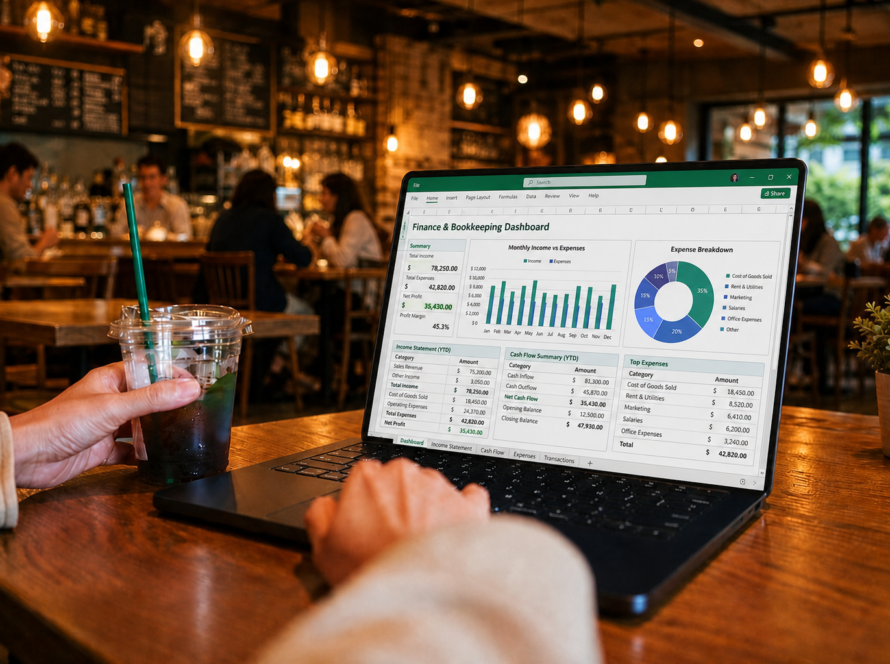
In an industry with notoriously thin profit margins, financial failure is rarely caused by a single catastrophic event. Instead, independent brands usually suffer from “silent profit leaks”—small, recurring operational discrepancies that steadily drain cash flow over time.
If your financial tracking relies on outdated manual processes, your back office may be quietly leaking margin. Here are five clear indicators that your system requires an immediate upgrade:
1. Your Bank Deposits Don’t Match Your POS Revenue
If your daily POS reports state you did $5,000 in gross revenue, but your bank account consistently reflects a lower, unreconciled number, you have an unmonitored variance. Unaccounted-for credit card processing fees, uncollected delivery app deposits, or unrecorded cash drawer drops quickly compound into thousands in missing revenue annually.
2. You Only See Your Prime Cost Once a Month
Your prime cost (COGS plus total labor) should remain between 60% and 65% of total revenue. If you only calculate this metric when your accountant delivers a P&L statement weeks after the month ends, you are navigating blind. Effective small restaurant bookkeeping updates prime cost dynamic metrics weekly or daily.
3. Vendor Invoice Price Hikes Go Unnoticed
Suppliers frequently adjust ingredient costs due to market fluctuations. If your system relies on manual entry of total invoice amounts rather than digital line-item extraction, you won’t notice that the price of frying oil or poultry spiked by 15% until your food cost percentage has already exploded.
4. Third-Party Delivery App Payouts are a Guessing Game
Platforms like DoorDash and UberEats deduct promotional fees, hardware subscriptions, and customer refunds directly at the source. If your back-office team simply logs the net payout hitting your bank without auditing gross sales against platform fees, you are likely overpaying on commissions and absorbing unverified customer refunds.
5. Sunday Evenings are Spent Processing Payroll Spreadsheets
If calculating split shifts, tip pooling allocations, and overtime thresholds requires hours of manual cross-referencing on weekends, your back-office tech stack is disconnected. Modern operations use integrated pipelines where shift data flows directly from the POS to the payroll ledger automatically.
💡 Takeaway: If any of these red flags sound familiar, your back-office framework isn’t just recording history—it’s actively costing you money.
- Take Control of Your Margins: Plug these silent leaks today. Check out our comprehensive guide on Automating Small Restaurant Bookkeeping to learn how Rescountant transforms chaotic data into pristine, real-time profitability.